Sunday, 15 March 2015

Freshwater Pearl Mussels

Initial training on the Torridge
 The Freshwater Pearl Mussel (Margaritifera margaritifera ) is in severe decline, under both habitat and exploitation threats despite being heavily protected! There are still large (1000s) numbers in Scotland and Yorkshire but here in the only other area of the UK with any populations the numbers are much less (100s). Those that are know about are literally clinging on in the Torridge and its tributaries.


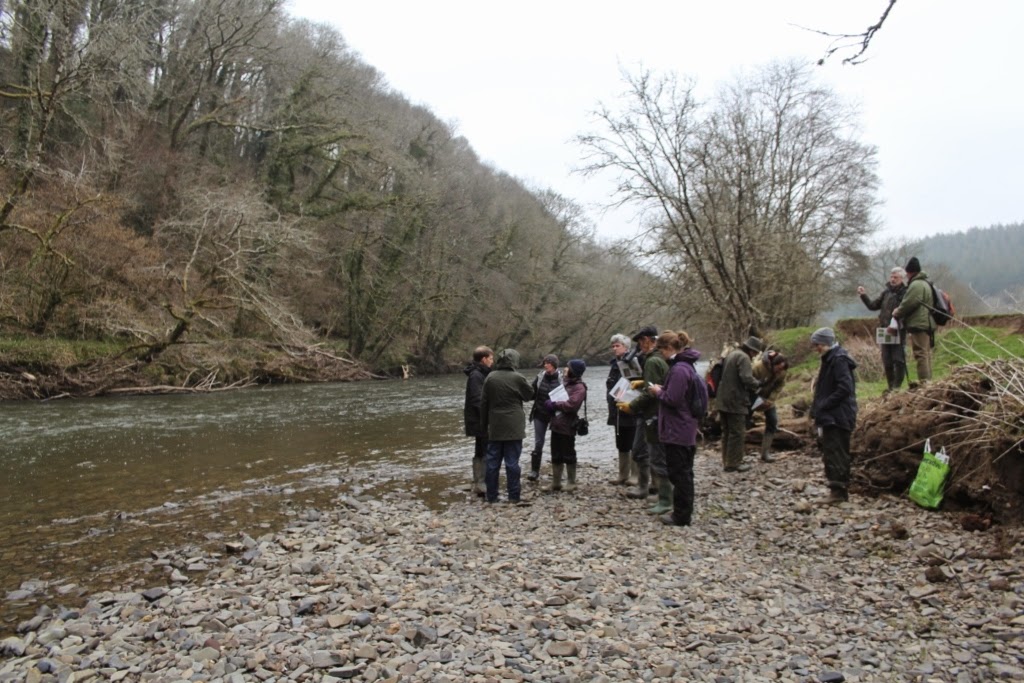
Last Wednesday (11th March) I undertook a day's training hosted by North Devon Nature Improvement Area/Biosphere staff to learn how to survey for potential breeding sites. We ten volunteers, from a variety of backgrounds, met with five experts representing the Environment Agency, Devon Wildlife Trust and North Devon Biosphere, on a secluded stretch of the River Torridge.
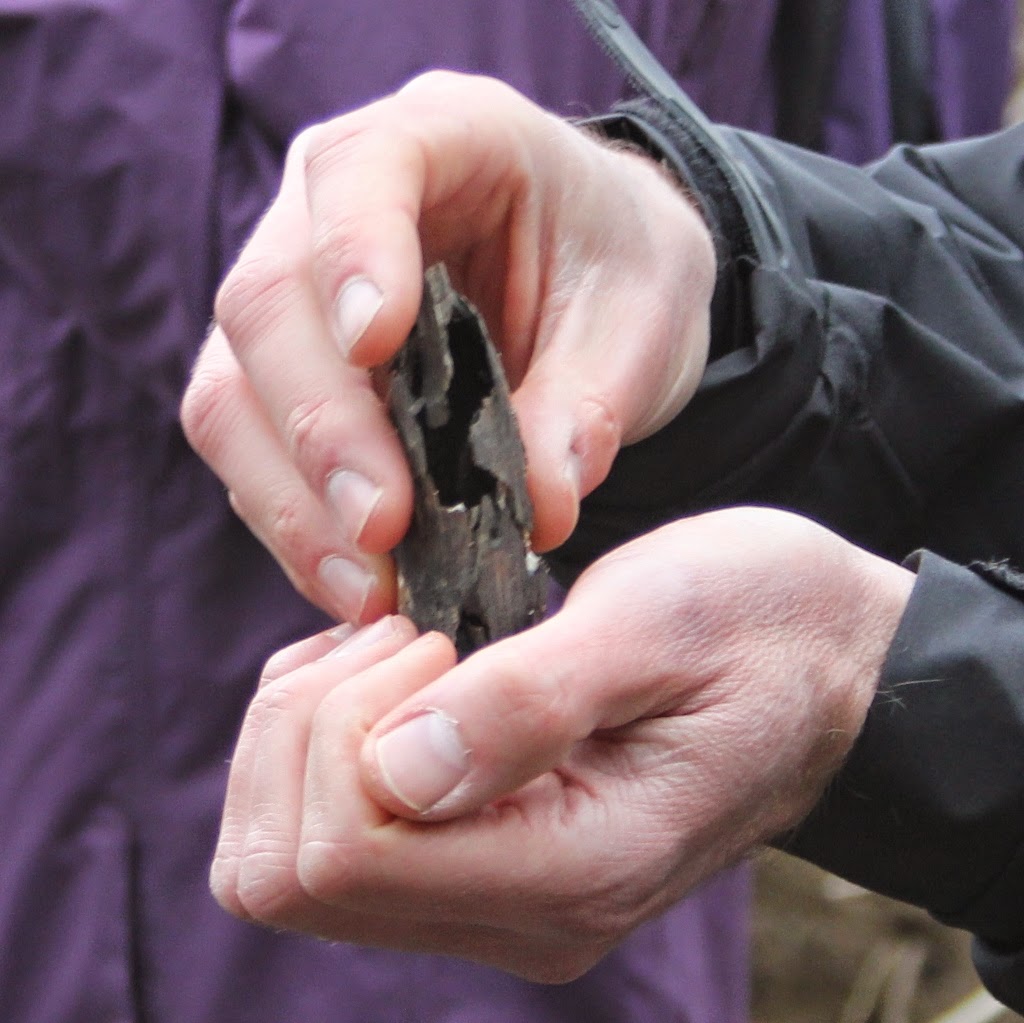

Old, dead Freshwater Pearl Mussel
During the morning we were shown how to record along a stretch river noting various parameters – Habitat type – which describes the state of the river channel; Bankside features and Special feature points. This last covers things like the presence of macrophyte beds, river width, water quality, extraction, exposed bedrock, bars and evidence of key species – Kingfisher, Otter and Dipper, and of course Mussels themselves all of which was done from the bank accompanied by our tutors.

This was followed by us practising what we had learned in groups of 2 or 3. We retraced the same stretch of water making our own observations on the recording sheet. This stretch does have an existing colony of Freshwater Pearl Mussels so we were recording parameters that were relevant to the species' existence. We all met up and compared, and where necessary, amended our surveys.

After lunch, each group was allocated a new stretch of river to survey in earnest. We did hear a Dipper and saw Kingfishers as well as tracks and spraints of Otter. Most excitingly, two keen-eyed surveyors found old, dead Mussels from the strand line on a couple of the river bars. They are surprisingly large.

We now await the call to spread out further along the river and begin using our new survey skills for real.
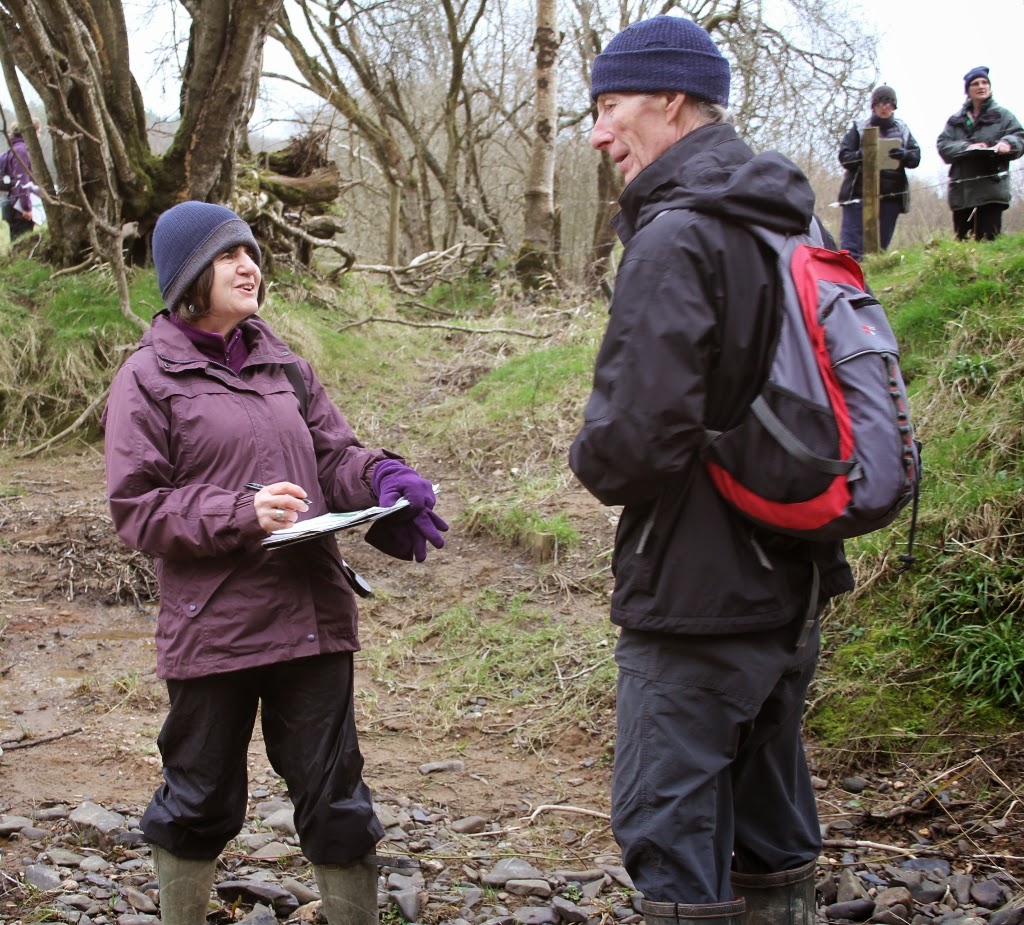
Individual teams surveying
Freshwater Pearl Mussels live for around 100 years and breed, in suitable habitats at 12-20 years of age. The population in the UK is described as moribund with no proven breeding having taken place in the last 40 years. Time is running out so we are helping to prove that the survey methods can correctly describe and identify the essential features of Mussel beds so that measure to prevent silt accumulation, overshading, flooding or damage which can prevent recruitment or breeding or kill them can be developed. A 3-year project officer post is expected to move this vital work forward before it is too late.

As well as helping in this critical work it was an opportunity to walk along and enjoy a beautiful stretch of one of Devon's enigmatic rivers.


Monday, 9 March 2015

Garden Moths

Moth Trap
On Friday (6th March) I took another step outside of my comfort zone.

A couple of years ago when I decided to look at moths seriously, I researched and dismissed the Garden Moths Scheme (http://www.gardenmoths.org.uk/) deciding to collect moths as and when the mood took me. GMS asked for a commitment to trap moths every Friday night for the period between March and November. The minimum effort is to trap for 27 of the 36 weeks. Not every moth is required to be recorded, GMS provide a spreadsheet of the 200 or so most common moths for the the South West region.

The idea is to reduce the variables to a minimum – moth species, day (irrespective of weather), moth trap and location – to provide a good statistical basis to account for why, where and when moths are present.

Moth Trap in the dark
In 2012 when I started with moths, this was all too daunting. So, I plodded along putting out my moth trap on warm, cloudy, moonless nights and have managed to record over 100 species in my small rural garden. I rely heavily on my County Moth Recorder to determine tricky, new, out of season, or very worn specimens. (Determine = expert confirms or suggest the correct species)

After a couple of years the County Recorder referred me to GMS and now is does seem less daunting. I don't expect to see all the moths on the South West list but I am more confident in my ability to identify at least some of them and I now have two experts to help with determinations!

Common Flat-Body
Agonopterix heracliana
I have recently converted my Skinner 40W actinic trap into a more rain friendly type of moth trap – a twin 20W Compact flourescent. This means it will cope better with adverse weather conditions that regularly trapping on a Friday night entails. One of the major tenets of GMS is to establish distribution and flight times irrespective of weather conditions so I am pleased to add my location to the database and continue my mothing learning curve.


And, the result of my first session – a single moth which is not on the GMS common 200 list -Agonopterix heracliana!

Wednesday, 25 February 2015

Looking under Logs

In April 2011, we had a large ash tree felled that was undermining our patio and coincidentally providing a toilet pedestal for the winter flock of Starlings.
Candle-snuff Fungus (Xylaria hypoxylon)

A couple of professional arboriculturists duly arrived with rigging, hard hats and chain saws and methodically took the tree down from the top to the bottom.  We enjoyed many open log fires with the resulting timber, but half a meter wide trunk was left in large rounds for me to dispose of.

Well, I tried splitting them, but with no luck and a jarred arm.  
So thinking, laterally, I dispersed them around the garden as ornamental features on the grass near the hedges and fences.

Eyelash Fungus (Scutellaria scutellata)
Four years on, we have a thriving saprophytic  community on and under each of them.  These range from fungi to invertebrates and the occasional vertebrate temporary resident.

The fungi range from the common Turkey tail (Trametes versicolor) on top of the logs, Candle-snuff Fungus (Xylaria hypoxylon) on the sides and a real treat, Eyelash fungus (Scutellaria scutellata) undeneath one of them. 


Austalian Flatworm (Australoplana samgiomea)
The invertebrates have found a really attractive safe and warm refuge under these logs.  I turn them up every week or so just to see what has sheltered there.  There are the ubiquitous slugs and a thriving colony of Woodhoppers (Arcitalitrus dorrieni) which is beginning to colonise Cornwall. Another coloniser is the Australian Flatworm (Australoplana sanguinea) which appears every year under the same log.  Millipedes, centipedes and wood lice all make their homes under the logs too.

Common Frog (Rana temporaria)
Vertebrates are less common but obviously preying on the above and I have recorded Common Frog (Rana temporania) and a Palmate Newt (Lissotriton helveticus).


I just have to be careful that my chicken does not get there before me as she particularly likes small slugs but is very catholic in her tastes and would scoff the lot if I let her.

Logs are well worth placing in your garden as refugia for all sorts of interesting creatures.

Thursday, 29 January 2015

Sternus vulgaris


Starling
Starlings

I really like Starlings.  
They are unbelievably colourful – in the right light -reflecting all the colours of the rainbow like oil does; 
they are cheerful – always singing – any bird's song will do and it doesn't even have to be birdsong; 
gregarious – form the small flocks in your garden to the millions in a murmuration.  

Sunday, 25 January 2015

Late Pruning


Acrobatic female Bullfinch
We are always late with pruning our ancient Buddleia. We do promise ourselves that we will do it before Christmas so that the buds can develop early. Last year, though we had an excuse to leave it later – in late winter/early spring we cut it back drastically and removed lots of dead wood and overlapping branches. So we complacently ignored our promise to prune in early winter and left it with all the new shoots and dead flower heads.

Saturday, 6 December 2014

Winter Birds

Lapwings
I had a spare morning yesterday when it was cold but calm and clear.  I thought I might walk the Bude Valley transect on my own. 

 Try as I might to see a Mediterranean Gull amongst the Black-headed Gulls at the Canal Basin, I was unsuccessful. I was rewarded with a good long sighting in the river Neet west of the sighting platform at Peter Truscott's Bridge.

Thursday, 27 November 2014

Here Be Dragons

Beautiful Demoiselle
Four-spot Hawker
This summer has been a fantastic season for all sorts of invertebrates.


In particular, and following a Dragonfly workshop organised by ERCCIS in June at Wheal Seaton and Red River Valley, my recognition skills have  improved somewhat and have helped me identify some of the large numbers of odonata that I have come across this year.