Showing posts with label Molluscs. Show all posts

Thursday, 31 March 2016

Bude Marine Conservation Group

Abby with 60 attendees - adults and children
I had known for a few months that Abby Crosby our local wildlife celebrity of Radio and TV fame was to hold a Strandline Discovery event at Sandymouth. When she asked me to join her afterwards to talk about community engagement, I jumped at the chance of a free cuppa.

She had an extremely good crowd of about 30 adults and 30 children who she sent of with buckets to see what they could find and identify.

After an hour's scrabbling along the strandline and in rock pools she called everyone together. She held her audience spellbound while she held a show and tell with all their finds.

Egg Wrack - 4 years old
She coaxed the children in to correctly identifying a mass of “snail” eggs which she explained were actually Whelk eggs and that sailors used the mass as a makeshift washing sponge. She explained the gory story of how the first hatchings gorged themselves on their siblings to cries of mock horror – survival of the fittest.

Next was a shore crab – prompted and eventually identified as a female, followed by a Limpet with stories of nightly foraging after which it followed its chemical slime trail to the exact spot it left earlier in the night. Then Egg Wrack which, by counting the “eggs” proved to be four years old. Finally the difference between shrimps and prawns – shrimps are almost totally transparent whereas prawns have stripy pyjama bottoms (legs).

With each item she took the opportunity to stress conservation and care of living creatures after which each was replaced in their original (or as near as possible) location.

The tide was too high for Honeycomb Worm, but one was found in a gully quite near to Dog Whelk eggs. The adults hatch into the predators of the seemingly impregnable limpet.

Dog Whelk eggs
A single Honeycomb worm
Over our tea, Abby introduced her colleague Natalie who had just started a contract to expand the current Voluntary Marine Conservation areas (currently Fowey, Helford, Looe, Polzeth and St Agnes) to include Bude.


Plans are in hand to engage with local groups of all kinds and individuals to establish a similar group in our area.


We await developments with eager anticipation.

Sunday, 15 March 2015

Freshwater Pearl Mussels

Initial training on the Torridge
 The Freshwater Pearl Mussel (Margaritifera margaritifera ) is in severe decline, under both habitat and exploitation threats despite being heavily protected! There are still large (1000s) numbers in Scotland and Yorkshire but here in the only other area of the UK with any populations the numbers are much less (100s). Those that are know about are literally clinging on in the Torridge and its tributaries.


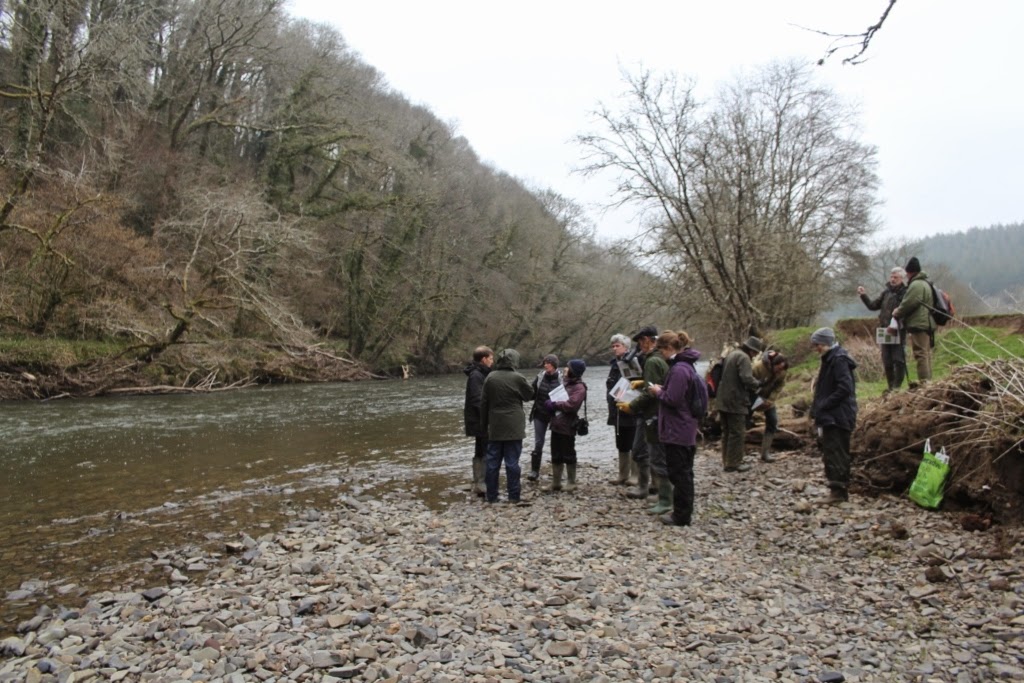
Last Wednesday (11th March) I undertook a day's training hosted by North Devon Nature Improvement Area/Biosphere staff to learn how to survey for potential breeding sites. We ten volunteers, from a variety of backgrounds, met with five experts representing the Environment Agency, Devon Wildlife Trust and North Devon Biosphere, on a secluded stretch of the River Torridge.


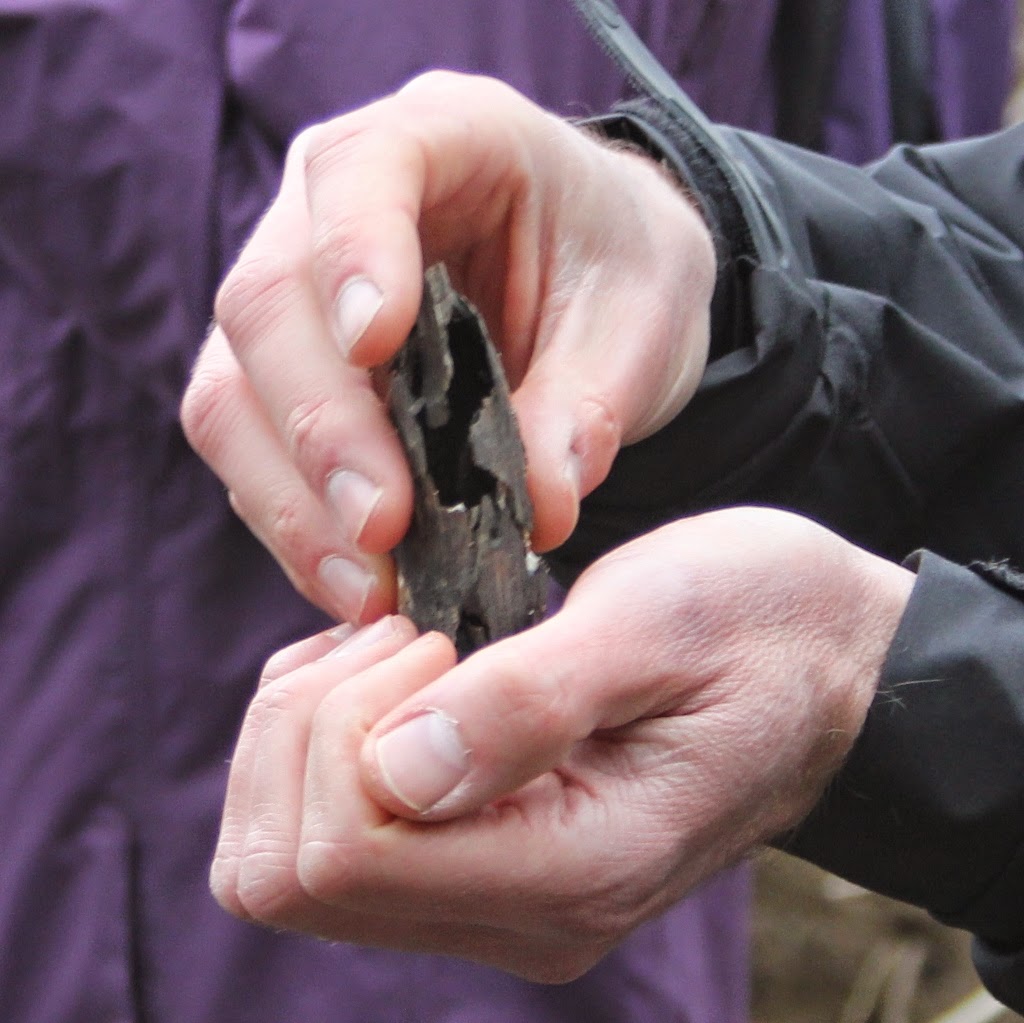
Old, dead Freshwater Pearl Mussel
During the morning we were shown how to record along a stretch river noting various parameters – Habitat type – which describes the state of the river channel; Bankside features and Special feature points. This last covers things like the presence of macrophyte beds, river width, water quality, extraction, exposed bedrock, bars and evidence of key species – Kingfisher, Otter and Dipper, and of course Mussels themselves all of which was done from the bank accompanied by our tutors.

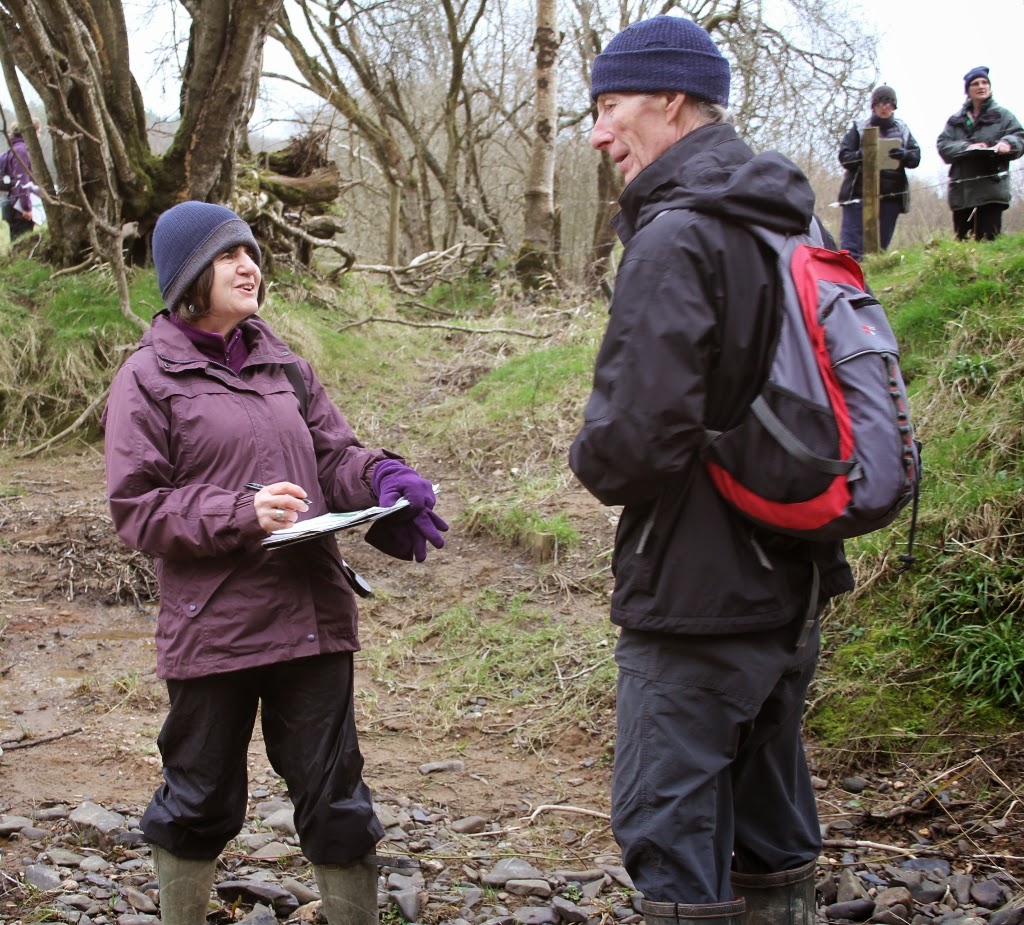
This was followed by us practising what we had learned in groups of 2 or 3. We retraced the same stretch of water making our own observations on the recording sheet. This stretch does have an existing colony of Freshwater Pearl Mussels so we were recording parameters that were relevant to the species' existence. We all met up and compared, and where necessary, amended our surveys.

After lunch, each group was allocated a new stretch of river to survey in earnest. We did hear a Dipper and saw Kingfishers as well as tracks and spraints of Otter. Most excitingly, two keen-eyed surveyors found old, dead Mussels from the strand line on a couple of the river bars. They are surprisingly large.

We now await the call to spread out further along the river and begin using our new survey skills for real.

Individual teams surveying
Freshwater Pearl Mussels live for around 100 years and breed, in suitable habitats at 12-20 years of age. The population in the UK is described as moribund with no proven breeding having taken place in the last 40 years. Time is running out so we are helping to prove that the survey methods can correctly describe and identify the essential features of Mussel beds so that measure to prevent silt accumulation, overshading, flooding or damage which can prevent recruitment or breeding or kill them can be developed. A 3-year project officer post is expected to move this vital work forward before it is too late.

As well as helping in this critical work it was an opportunity to walk along and enjoy a beautiful stretch of one of Devon's enigmatic rivers.